If you are a car owner, you undoubtedly understand just how vital it is to consistently maintain your vehicle in good working condition. Proper maintenance not only enhances your driving experience but also significantly extends the lifespan of your automobile. Among the many critical components that require regular attention, one stands out due to its essential role in engine functionality: the timing belt. This seemingly small yet highly important part plays a pivotal function within both the valve train system and the broader transmission mechanism of your engine.
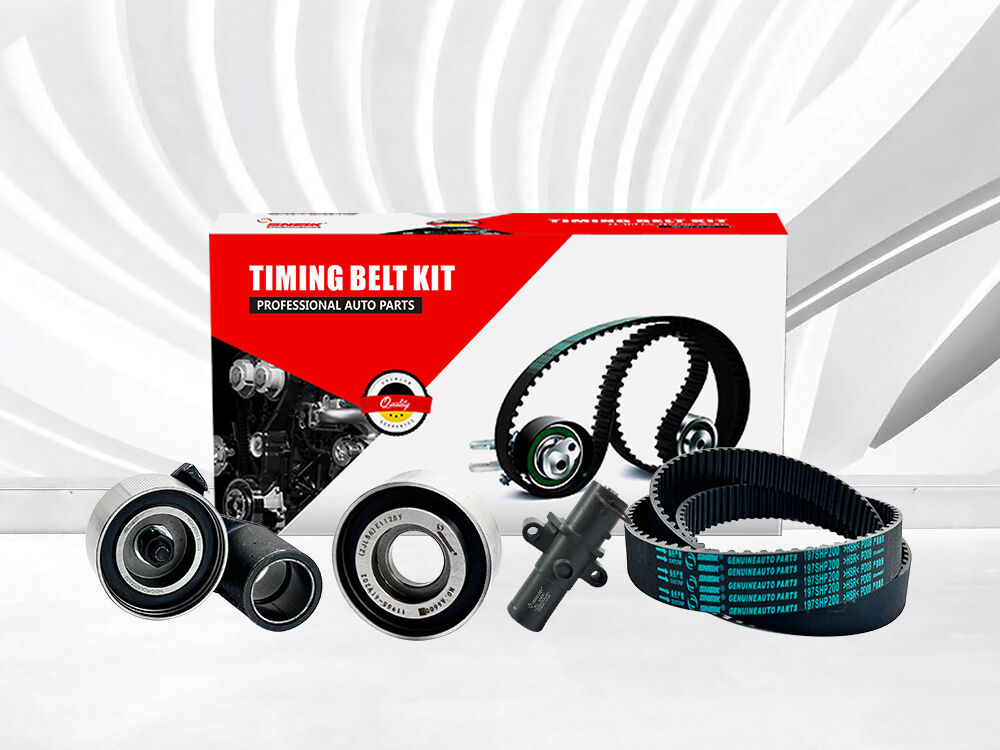
The primary responsibility of the timing belt is to guarantee precise synchronization between the crankshaft and the camshaft(s). By doing so, it ensures that the opening and closing of the engine’s intake and exhaust valves occur at exactly the right moments during each combustion cycle. This coordination is achieved through a carefully engineered connection between the crankshaft and the camshaft, operating according to a specific gear ratio or transmission ratio. Without this accurate timing, the internal combustion process would be severely disrupted, potentially leading to inefficient performance or even serious mechanical damage.
Investing in high-quality timing belt assemblies is therefore not merely a recommendation—it is a necessity for anyone who wishes to preserve the longevity, reliability, and peak operational efficiency of their vehicle’s engine. Below are several compelling reasons why choosing premium-grade belt sets is a smart and responsible decision for every conscientious driver.
While it might be tempting to opt for cheaper, low-quality alternatives to save money upfront, such choices often prove costly in the long run. Inferior belts are typically constructed from substandard materials that degrade more quickly under heat, stress, and continuous motion. As a result, they are far more prone to premature wear, cracking, or even sudden breakage. A failed timing belt can cause catastrophic internal engine damage—especially in interference engines—leading to repair bills that far exceed the initial savings. In contrast, high-quality belt sets are engineered with superior materials and rigorous manufacturing standards, offering significantly greater resistance to wear and tear, thereby ensuring a much longer service life.
A well-made timing belt assembly contributes directly to the smooth and efficient operation of your engine. When the belt is in excellent condition, it maintains perfect valve timing, which allows for optimal air-fuel mixture intake, efficient combustion, and proper exhaust expulsion. On the other hand, a worn, stretched, or damaged timing belt can throw off this delicate balance, resulting in symptoms such as engine misfires, reduced power output, rough idling, poor fuel economy, or—in severe cases—complete engine stalling or failure to start. By selecting a high-performance belt set, you help ensure that your engine continues to deliver reliable power and responsiveness over time.
Perhaps most importantly, the condition of your timing belt has direct implications for your safety—and the safety of others. A sudden timing belt failure while driving at high speeds can lead to immediate and total engine shutdown. In certain engine designs, this may also cause pistons to collide with open valves, resulting in bent valves, damaged pistons, or even a seized engine. Such an event not only leaves you stranded but could also create hazardous situations on busy roads or highways. High-quality timing belt assemblies, built with robust materials and precision engineering, drastically reduce the likelihood of unexpected failure, thereby enhancing overall vehicle reliability and road safety.
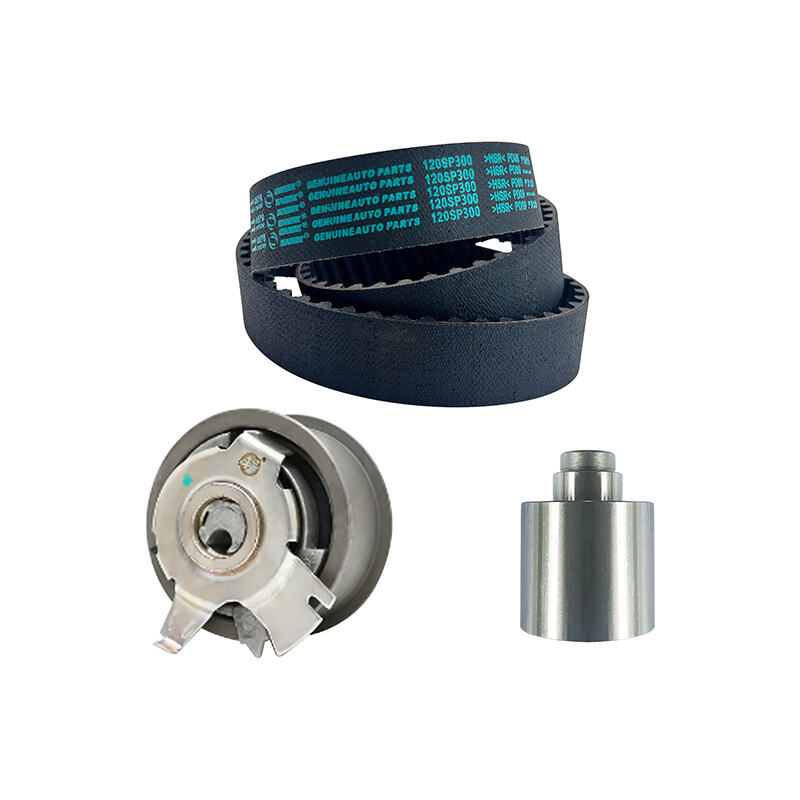
When it comes to selecting a new timing belt set, paying close attention to the materials used in its construction is essential. A typical high-performance belt assembly includes several key components: hydrogenated nitrile butadiene rubber (HNBR) or chloroprene rubber (CR) for flexibility and heat resistance; a durable canvas layer (often referred to as backing cloth or tooth fabric) that reinforces the belt’s structure; high-tensile fiberglass cords that provide longitudinal strength and dimensional stability; and sometimes aramid fibers (such as Kevlar) for added toughness and resistance to stretching. These advanced materials work together to deliver a belt that can withstand extreme temperatures, constant tension, and repetitive mechanical stress without compromising performance.
In summary, the timing belt is far more than just another replaceable part—it is a cornerstone of your engine’s mechanical harmony. Choosing a high-quality timing belt set is a wise, forward-thinking investment that safeguards your engine’s health, maximizes performance, and protects you and your passengers on the road. Therefore, the next time your vehicle requires a timing belt replacement, be sure to look for trusted brands known for excellence in engineering and material quality. Specifically, consider identifying and selecting products from the SNEIK brand, which offers premium-grade timing belt assemblies designed to meet the highest standards of durability, precision, and safety.
 Hot News
 EN
EN